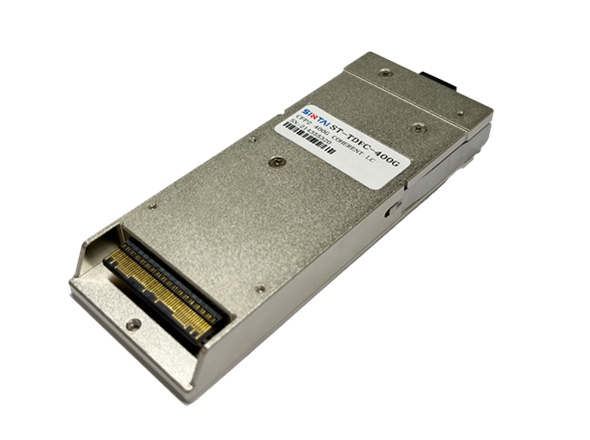
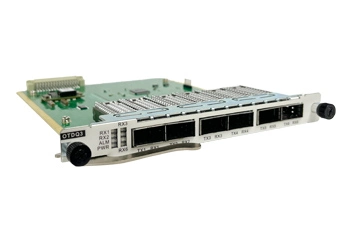
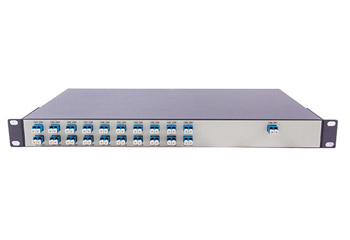
With the explosive growth in demand for 5G, cloud computing, and AI computing power, the need for high-speed optical modules in data centers and communication networks continues to rise. As the current mainstream high-speed interconnect solution, 400G optical modules have become a focal point in the industry, particularly regarding their packaging technologies and classification standards. This article provides an in-depth analysis of the packaging forms, technical features, and application scenarios of 400G optical modules.
QSFP-DD (Quad Small Form-factor Pluggable Double Density)
Features: Expands upon the traditional QSFP packaging with 8 channels (50G PAM4 per channel), supports hot-plugging, power consumption controlled at 10-14W, and is compatible with existing 100G QSFP ports.
Advantages: High density and strong backward compatibility, ideal for data center leaf-spine architectures.
OSFP (Octal Small Form-factor Pluggable)
Features: 8-channel design, slightly larger than QSFP-DD but offers better thermal performance, supporting higher power (e.g., future 800G upgrades).
Application Scenarios: Long-distance transmission in hyperscale data centers (e.g., metropolitan area networks).
CFP8
Features: An early 400G solution with larger size and higher power consumption (≤24W), primarily used for long-distance transmission in telecom backbone networks, gradually being replaced by compact packaging.
COBO (Consortium for On-Board Optics)
Features: On-board packaging, directly integrated into equipment motherboards to reduce signal loss, but offers lower flexibility, making it suitable for specific high-performance computing scenarios.
SR8 (Short-Range Multimode)
Transmission distance ≤100 meters, utilizes 8×50G PAM4 VCSEL lasers, suitable for intra-rack connections in data centers.
DR4/FR4 (Medium-Range Single-Mode)
DR4 supports 500 meters (4×100G NRZ), FR4 supports 2 kilometers (4×100G PAM4), used for cross-room interconnections in data centers.
LR8/LR4 (Long-Range Single-Mode)
Transmission distance of 10-40 kilometers, targeting telecom metropolitan area networks or DCI (Data Center Interconnect).
Power Consumption and Thermal Management: 400G modules typically exceed 10W in power consumption, necessitating silicon photonics (SiPh) and CPO (Co-Packaged Optics) to reduce energy usage.
Cost Optimization: 25G/50G EML lasers remain mainstream, but low-cost VCSEL solutions are gaining traction in short-range applications.
Next-Generation Evolution: 800G modules are already entering commercial use, with packaging compatibility (e.g., QSFP-DD800) becoming a key competitive factor for manufacturers.




 English
  русский
  Indonesia
  Español
  português
  العربية
  français
  Deutsch
  हिंदी
हिंदी  tiếng việt